

There is a strange moment almost every fragrance lover experiences.
You smell a perfume on someone else and instantly fall in love with it. It smells elegant, smooth, addictive, almost unforgettable. Naturally, you buy the exact same bottle expecting the same experience.
But when you spray it on yourself, something feels different.
Maybe it becomes sweeter, sharper, colder, softer. Sometimes it disappears too quickly. Other times, a note you never noticed before suddenly dominates the entire fragrance.
At first, many people assume the perfume has changed.
In reality, the perfume is doing exactly what it was designed to do.
What changes is the environment it interacts with: your skin, your body temperature, your natural oils, your hydration level, even your personal chemistry.
Perfume is not static. It is alive. The moment fragrance touches human skin, it begins transforming.And that transformation is unique to every individual.
Perfume Is More Than a Scent
Most people think perfume exists as a finished aroma inside the bottle.
Technically, that is only partially true.
Inside the bottle, fragrance molecules remain relatively stable. But once sprayed into the air and absorbed by the skin, those molecules start reacting to heat, moisture, oils, and oxygen.
This is why perfumery is often described as both chemistry and art.
A perfume is not simply “worn.” It evolves. Think of perfume like music played through different speakers. The song remains the same, but the output changes depending on the system delivering it. Human skin works the same way. Your body becomes part of the fragrance itself.
1. Your Skin Chemistry Changes the Fragrance
One of the biggest reasons perfume smells different from person to person is skin chemistry.
Every individual naturally produces different amounts of:
- skin oils
- sweat
- acidity levels (pH)
- moisture
- hormones
These factors influence how fragrance molecules behave after application.
For example:
Oily Skin
People with oilier skin often notice that perfumes:
- last longer
- smell richer
- project more strongly
- develop more warmth
Natural oils help hold fragrance molecules on the skin for a longer period of time.
Dry Skin
On dry skin, fragrances may:
- evaporate faster
- feel lighter
- lose depth quickly
- become less noticeable after a few hours
This is one reason why some people think a perfume has “poor performance,” while others describe the exact same fragrance as incredibly long-lasting.
The perfume itself is not changing.
The skin is changing how it behaves.
2. Body Temperature Influences Projection
Heat plays a major role in fragrance performance.
Perfume molecules evaporate faster when exposed to warmth. This evaporation helps release scent into the air — what fragrance enthusiasts call “projection.”
People with naturally warmer body temperatures often experience:
- stronger scent projection
- faster fragrance development
- more noticeable top notes
Meanwhile, cooler skin temperatures may cause fragrances to evolve more slowly and subtly.
This is why a perfume can smell energetic and vibrant on one person, yet softer and quieter on another. Even weather matters. A fragrance worn during summer may smell completely different during winter. Some perfumes truly “wake up” in heat, while others become smoother in cold air.
3. Hydrated Skin Holds Fragrance Better
One of the simplest ways to improve perfume longevity is proper skin hydration.
Moisturized skin creates a better surface for fragrance molecules to cling to.
That is why perfumes often last longer:
- after a shower
- over unscented lotion
- on well-moisturized skin
Dry skin absorbs fragrance too quickly, causing the scent to fade faster.
Hydration does not necessarily make a perfume stronger.
It helps the fragrance remain present for a longer time.
This small detail explains why the same perfume may survive eight hours on one person but disappear within three hours on someone else.
4. Perfume Changes Over Time
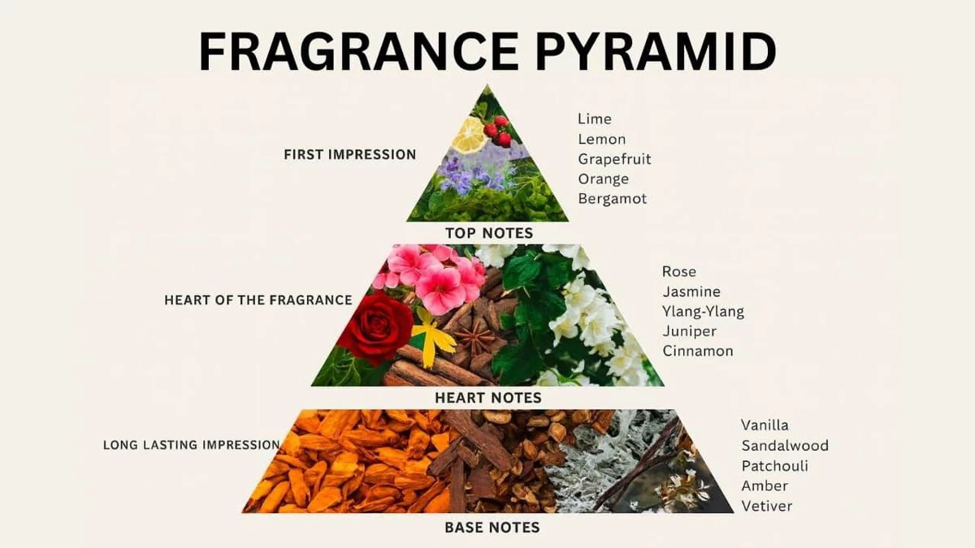
A perfume is built in layers.
Perfumers design fragrances to unfold gradually rather than reveal everything at once.
These layers are commonly divided into three stages:
Top Notes
The first impression.
Usually fresh, bright, citrusy, fruity, or airy.
These notes evaporate quickly, often within 15–30 minutes.
Heart Notes
The personality of the fragrance.
Often floral, spicy, aromatic, or creamy.
This stage typically lasts several hours.
Base Notes
The foundation.
Usually woods, vanilla, amber, musk, leather, or resins.
These notes remain closest to the skin and can last all day.
This evolution is one reason people sometimes dislike a perfume at first spray but love it later.
The opening may not represent the fragrance’s true character.
Some perfumes are designed to become more beautiful with time.
5. Memory and Emotion Affect Scent Perception
Perhaps the most fascinating part of fragrance is psychological.
Smell is deeply connected to memory.
The human brain processes scent in areas linked to:
- emotion
- nostalgia
- comfort
- attraction
- personal experience
This means perfume is never experienced purely as chemistry.
It is also experienced emotionally.
A vanilla fragrance may remind one person of childhood desserts.
For another, it may evoke luxury hotels or past relationships.
The exact same scent can feel comforting, romantic, powerful, clean, mysterious, or emotional depending on the memories attached to it.
In many ways, fragrance becomes personal storytelling.
Invisible, yet unforgettable.
Why Perfume Smells Better on Some People
Sometimes people say:
“That perfume smells better on her.”
This does not necessarily mean the perfume is objectively better.
It means the fragrance harmonizes naturally with that person’s skin chemistry and body warmth.
Certain ingredients become amplified while others soften.
The result feels balanced.
This harmony is what many people describe as finding a “signature scent.”
Not simply a perfume you like, but a perfume that feels naturally connected to you.
How to Properly Test a Perfume
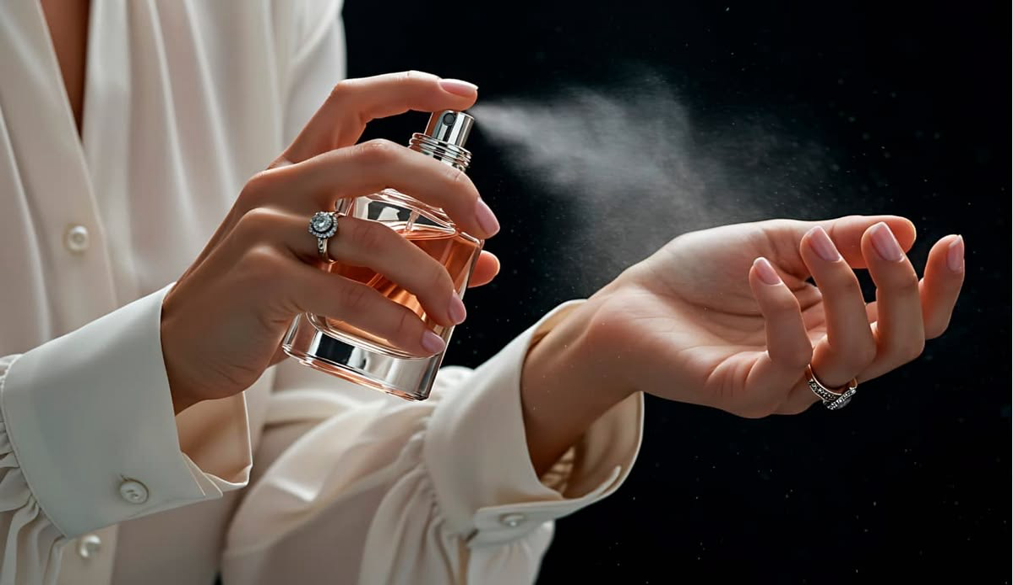
Many people judge perfume too quickly.
A proper fragrance test takes time.
Here are better ways to evaluate a perfume:
Test on Skin, Not Only Paper
Blotter strips cannot replicate skin chemistry.
Always test directly on your wrist or arm.
Wait at Least One Hour
The true personality of a fragrance often appears later.
Do not judge within the first few minutes.
Avoid Testing Too Many at Once
Your nose becomes overwhelmed quickly.
Three or four perfumes are usually enough in one session.
Try It in Real Life
Wear the fragrance outside.
Observe how it behaves in heat, air conditioning, movement, and throughout the day.
A perfume should not only smell good initially.
It should feel good to live with.
Perfume Is Personal Chemistry
At its core, perfume is not only about smelling attractive.
It is about interaction.
Between fragrance and skin.
Between memory and emotion.
Between identity and atmosphere.
That is why the same bottle can tell a different story on every person who wears it.
And perhaps that is what makes fragrance so fascinating.
It is invisible, yet deeply personal. A scent may enter a room quietly
but sometimes, it stays in memory long after the person has left.
So after all this—what if finding the right perfume isn’t about following trends, but discovering what truly works with you?
Because the most unforgettable fragrance is rarely the loudest one.
It’s the one that feels effortless on your skin and naturally becomes part of who you are.
At Trove, we believe fragrance should adapt to people—not the other way around.
That’s why every Trove composition is thoughtfully built through layers of notes, allowing the scent to evolve differently and reveal its character uniquely on each wearer.
Maybe the real question isn’t: Which perfume smells the best?
Maybe it’s:
So, which Trove scent feels the most like you?
Explore the notes. Discover your chemistry. Find your Trove.
Tinggalkan Balasan